


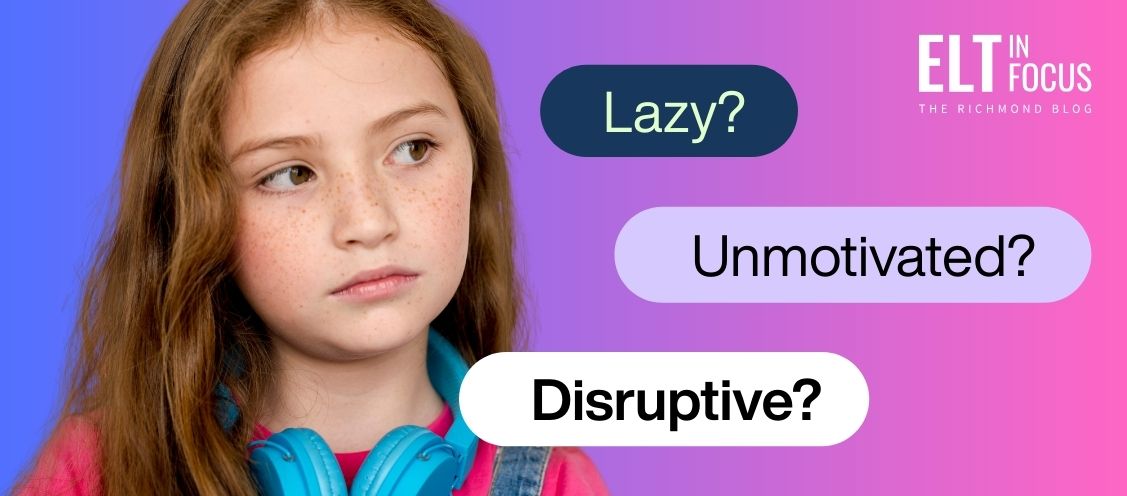

But don’t get me wrong - I’m not saying that the class clown isn’t behaving like a clown, or that the disruptive kid isn’t disrupting your class. I’m not even saying that the lazy or unmotivated student doesn’t really seem lazy or unmotivated. The real problem with these students might not be their attitude, but that nobody has recognised what lies underneath.
For many students with dyslexia or ADHD, it is not a matter of a lack of willingness to participate and learn. It is that these students, many times, learn in different ways — ways that do not align with traditional teaching methods.
They are like the proverbial fish that is asked to climb a tree to prove its validity in the animal world. And when the only way to prove your value is climbing that tree, teachers will see the non-climbing fish as unmotivated, lazy, and probably stupid. In the end, it will even come to a point where the fish will think the exact same thing about itself.
But fish don’t climb trees; they swim. In the same way, a student with dyslexia might find it difficult to read or spell, but have a gift for pattern recognition and out-of-the-box problem-solving. A student with ADHD might struggle to sit still and pay attention for longer periods of time, but be extremely creative and sensitive to other people’s emotions.
Therefore, recognising the signs of dyslexia, ADHD, and autism in the classroom is incredibly important.
In many countries, the gap between the likely prevalence of any neurodivergent condition and what schools formally identify is still significant.
Spain is no different. The national federation of dyslexia associations, FEDIS, talks about up to 10% of students having a dyslexic profile. Nevertheless, according to the Ministry of Education, 201,030 students in compulsory education were registered under the category “trastornos del aprendizaje” in the 2023–24 school year, which is around 4% of all pupils. Among these “trastornos del aprendizaje”, dyslexia is just one of the conditions.
This gap between what we suspect to be the number of dyslexic pupils and those who are actually receiving accommodations has severe consequences. A 2019 BBC article states that “schools fail to diagnose at least 80% of dyslexic pupils”. Lack of awareness, lack of screening tools, long waiting lists for diagnosis, and varying diagnostic criteria are all part of the problem.
Research on dyslexia has long shown that learning and self-image are deeply connected. A systematic review found that children with dyslexia or literacy difficulties are more likely to develop negative self-images, sometimes coming to believe that others see them as less capable, less intelligent, or simply lazy. Such beliefs extend beyond reading tasks. They shape how a child sees themselves as a learner, and eventually as a person.
ADHD shows a rather similar pattern. A 2024 meta-analysis found that children and adolescents with ADHD had significantly lower levels of self-esteem than their neurotypical peers, especially in academic environments. But this should not surprise us. School is where children receive constant messages about success, failure, belonging, and disappointment: teachers’ comments, report cards, other students talking. If a child repeatedly hears that they don’t pay attention, are disruptive, act immature, are disorganised, or are just “not applying themselves enough,” these are not mere comments or messages. Those words are absorbed and, over time, become identity.
This is why emotional intelligence and self-esteem should not be treated as optional extras in schools. They are central to effective learning. Even when offered specific support for dyslexia or ADHD, a child who has come to believe “I am lazy” or “I always get things wrong” is unlikely to benefit fully from that support until the feeling of shame is addressed. Before progress can happen, the emotional damage often has to be named and undone.
For many students with ADHD, there is another layer that teachers and families are now starting to recognise: intense sensitivity to feedback, criticism, and feelings of rejection. Rejection sensitive dysphoria, or RSD, does not have a formal diagnosis, and the evidence base is still developing. But it is widely reported among students with ADHD and is increasingly discussed in clinical contexts. For a child who already expects to fail, even minor corrections may not feel like simple guidance; they may feel like proof that they are fundamentally wrong, flawed, and disappointing. What parents and teachers see as overreaction in a child may actually be accumulated emotional pain, built up from past experiences.
One often-quoted estimate illustrates this in a powerful way. In a 2010 article, Dr Michael Jellinek wrote that a child with ADHD might receive as many as 20,000 more negative or corrective messages by age 10. It should be considered as an estimate rather than a precise peer-reviewed statistic. Even so, its force is obvious: some children live in an atmosphere of almost constant correction. Over time, corrections become biographies.
But let’s be fair. Most teachers are not mislabelling children on purpose. They are working under pressure, often with large classes, limited time, and uneven access to training. The problem is probably not teacher indifference. It is that many teachers have not been adequately trained and prepared to recognise these patterns early and respond with confidence. In my own training programmes, I can see the willingness of teachers to understand and learn about dyslexia and ADHD so that they can truly help their students. But most of all, I see the faces of these teachers when they realise which of their students were mislabelled and misunderstood.
Nevertheless, teachers should never be expected to diagnose. They need training to recognise when “lazy” may actually mean overwhelmed, when “disruptive” may mean dysregulated, and when “unmotivated” may mean a child who has simply had too many chances to feel that they will fail.
In the end, the challenge for schools is not to label students more quickly, but to look more carefully at what those labels might be hiding. When teachers are equipped to recognise the signs of dyslexia, ADHD, and other forms of neurodivergence, behaviour that once seemed like laziness or defiance can be understood in a very different light. For many students, that shift in understanding can be life-changing. Instead of growing up believing that something is wrong with them, they are given the chance to discover how they learn best—and to see themselves not as failures, but as capable learners whose strengths simply emerge in different ways.